
Frcr Qualification, The FRCR qualification is one of the most respected credentials in the field of radiology worldwide. Awarded by the Royal College of Radiologists (RCR), this qualification demonstrates a radiologist’s knowledge, clinical competence, and commitment to high professional standards. For doctors aiming to build a successful career in diagnostic or interventional radiology, earning the FRCR qualification can open doors to global career opportunities.
In this article, we will explore what the FRCR qualification is, its structure, eligibility criteria, exam format, and career benefits.
What Is the FRCR Qualification?
The FRCR qualification stands for Fellowship of the Royal College of Radiologists. It is a postgraduate medical credential awarded to doctors who successfully complete a series of rigorous examinations in clinical radiology or clinical oncology.
Although it is a UK-based qualification, the FRCR is internationally recognized in countries across the Middle East, Asia, Australia, and parts of Europe. Many healthcare institutions consider it equivalent to other national radiology board certifications.
Who Is Eligible for the FRCR Qualification?
To pursue the FRCR qualification in clinical radiology, candidates typically must:
-
Hold a recognized primary medical degree.
-
Be registered with a medical council.
-
Have completed or be undergoing structured radiology training.
-
Demonstrate adequate clinical experience.
International candidates can also apply, provided they meet the eligibility criteria set by the Royal College of Radiologists.
Structure of the FRCR Qualification
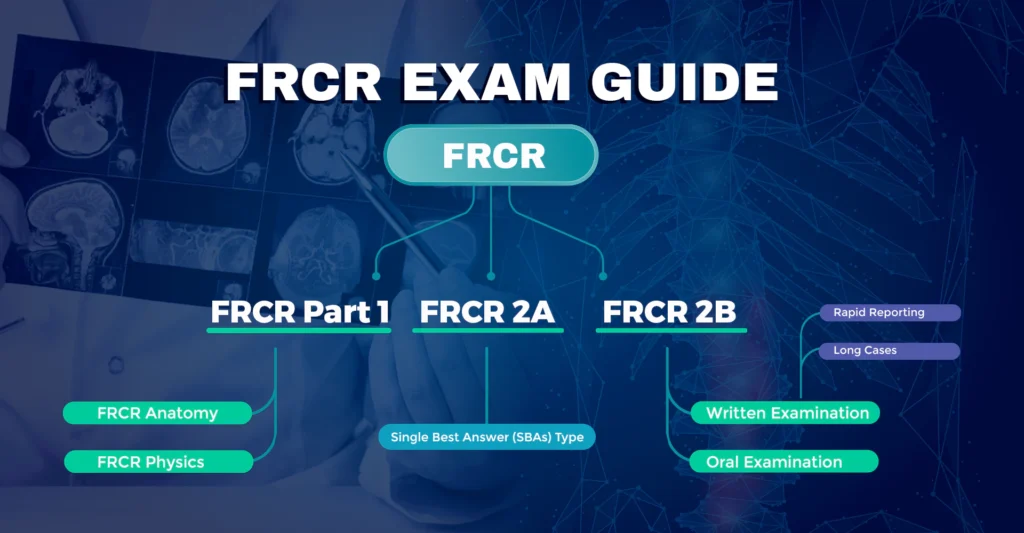
The FRCR qualification in Clinical Radiology consists of three main stages:
1. First FRCR Examination (Anatomy & Physics)
This stage assesses:
-
Radiological anatomy knowledge
-
Medical physics principles related to imaging
It forms the foundation for advanced radiology practice.
2. Final FRCR Part A
Part A focuses on:
-
Core radiology knowledge
-
Multiple-choice questions covering different body systems and imaging modalities
3. Final FRCR Part B
Part B is the final and most challenging stage. It includes:
-
Reporting sessions
-
Rapid reporting
-
Oral examinations (viva)
This stage tests practical reporting skills, diagnostic reasoning, and communication ability.
Benefits of the FRCR Qualification
1. International Recognition
The FRCR qualification is widely accepted outside the UK, making it easier for radiologists to work abroad.
2. Career Advancement
Many hospitals prefer candidates with FRCR for consultant-level roles and senior radiology positions.
3. Higher Earning Potential
Specialists holding the FRCR qualification often receive competitive salary packages, particularly in private healthcare and Gulf countries.
4. Professional Credibility
Being a Fellow of the Royal College of Radiologists enhances your professional profile and credibility within the medical community.
How to Prepare for the FRCR Qualification
Preparation requires dedication and structured study. Successful candidates often:
-
Follow the official RCR curriculum
-
Use question banks and mock exams
-
Participate in study groups
-
Attend FRCR preparation courses
-
Practice image reporting daily
Time management and consistent revision are essential due to the depth and breadth of the syllabus.
FRCR Qualification for International Doctors
For international medical graduates, the FRCR qualification is a valuable pathway to:
-
Work in the UK (subject to regulatory requirements)
-
Strengthen applications for specialist registration
-
Gain recognition in countries that value UK medical training standards
However, candidates should also verify local licensing requirements in their desired country of practice.
Final Thoughts
The FRCR qualification is a prestigious and challenging credential that validates a radiologist’s expertise and commitment to excellence. While the journey requires significant effort and preparation, the long-term rewards—professional growth, global mobility, and enhanced career prospects—make it a worthwhile investment.
You Might Also Like These:
saudi nursing licensing exam passing score